

Custom Search
|
Custom Search
|
 |
|
"People will not look forward to posterity who never look backward to their ancestors."
Quotes
Shops Ireland Bunús na Gaeilge Did You Know? Himself/Herself Write to Us Readers Write.. Links/Link to Us Advertise with us Awards & Testimonials
|
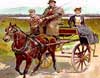
Marry in May and Rue the Day Pipers: Consider having a piper at the church to play as guests arrive. After the ceremony the piper could pick up the recessional tune and continue it outside as guests leave. Then you could have him/her play as your guests arrive at the reception and when you both make your entrance. But make sure the piper(s) plays Irish or "Uillean" pipes which are very different from Scottish bagpipes. Check out the soloist on the video of the original Riverdance (Dublin production). An incredibly beautiful sound that is much more gentle on the ears than Scottish bagpipes. Lucky horseshoe:Irish brides used to carry a real horseshoe for good luck. (With the points turned up so the luck won't run out). Today, most Irish brides carry a horseshoe made out of porcelain or fabric. Magic Hanky: This charming custom involves having the bride carry a special hanky that with a few stitches can be turned into a christening bonnet for the first baby. With a couple of snips it can be turned back into a hanky that your child can carry on his/her wedding day. Magic hankies are available at most Irish gift shops. Make-up bells: The chime of bells is thought to keep evil spirits away, restore harmony if two people are squabbling, and also remind a couple of their wedding vows. Giving a bell as a gift has become an Irish tradition. You could also have your greeters hand out tiny bells to the guests which they could ring as they leave the church. (You might want to let guests know when they're supposed to be rung - perhaps mention it in your program along with an explanation of the custom). Guests could also ring their little bells at the reception in lieu of clinking glasses. Irish Dancers: Consider hiring a group of Irish dancers to hand out your programs at the church. Dressed in their full regalia, it would add a wonderful touch of of pageantry and color. They could also dance at the reception later. We did this at our daughter's reception and it was a major hit. Readings: Our daughter had the following Irish wedding vow on the front of her program: Irish Wedding Song. Very popular at contemporary Irish weddings. We had two friends sing this at our daughter's reception while the newlyweds cut the cake. Afterwards, I thought we should have had the lyrics typed up and placed on the tables so that everyone could join in. Claddagh: If you're interested, we have an article that explains how this romantic symbol came into existence, click The Claddagh Ring. Salt and oatmeal: In the old days, a bride and groom would take three mouthfuls of salt and oatmeal as a protection against the power of the evil eye. Also, when she's dancing, the bride must never take both feet off the floor because the fairies will get the upper hand. Fairies love beautiful things and one of their favorites is a bride. There's many an Irish legend about brides being spirited away by the "good" people! It's also very risky to wear green and it's very bad luck for a bride or the groom to sing at their own wedding. Jaunting Car: The men of the bridal party would hoist the groom in a chair and parade him around as a newly married man. Here's a list of other superstitions. And it's by no means complete... -A fine day meant good luck, especially if the sun shone on the bride. If you're a Roman Catholic, one way to make certain that it won't rain is to put a statue of the Infant of Prague outside the church door on the wedding morning. I hope you've enjoyed reading this brief introduction to an Irish wedding. And if you're planning to be married soon, I'll end with this contemporary Irish toast: May all your joys be pure joy, and all your pain, champagne. Sláinte! "Just want to say how happy I was to see your site. Enough here to keep me busy (and out of trouble) for ever! Thanks so much!" |
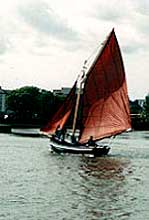 The Galway Hooker The Galway Hooker
This unique vessel, with its distinctive curved lines and bright red sails, originated in the village of Claddagh. During the 19th century, hookers supported a significant fishing industry and also carried goods, livestock and fuel. Seán Rainey is remembered for building the last of the original boats, the Truelight, for Martin Oliver who was to become the last king of the Claddagh; as king, he was entitled to white sails on his boat. Since the mid seventies, many of the old sailing craft which were on the verge of extinction have been lovingly restored and new ones have been built. During the summer months they can be seen at festivals such a Cruinniú na mBád - the Gathering of the Boats - in Kinvara.
|
||||||||||
|
||||||||||||
| All contents copyright © 2001 through 2011 inclusive - all rights reserved. March 4, 2011 |
Rollover button Images: Wedding LaRose, Kids Reading & Kitchen Apples and Tea from All Posters prints. The information provided on this site is offered as-is, without warranty. This site's owners, operators, authors and partners disclaim any and all liability from the information provided herein. Any trademarks or registered trademarks on this site are the property of their respective owners. |
This Web Site Bashed, Kicked & Glued together by Russ Haggerty. |
||||||||||


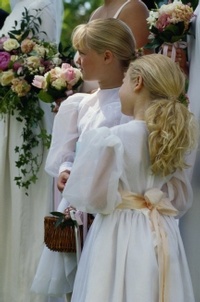 When I told our daughter about this old Irish verse, she changed her wedding date from May to April: Marry in April if you can, joy for maiden and for man.
 The Traditional Irish Wedding