

Custom Search
|
Custom Search
|
 |
|
"People will not look forward to posterity who never look backward to their ancestors."
Quotes
Shops Ireland Bunús na Gaeilge Did You Know? Himself/Herself Write to Us Readers Write.. Links/Link to Us Advertise with us Awards & Testimonials
|
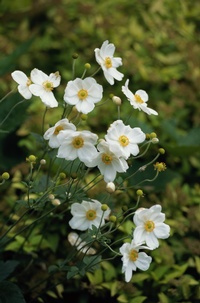
Eventually, Beltane became more strongly associated with Belenos, who is the god of light, healing and a special protector of cattle. One custom that survived for hundreds of years was driving the cows between two bonfires and carefully singeing their hair with burning material. The fields would also be treated to a singeing from the sacred bonfire, as a means of purification. Remember the old childhood rhyme, "Here we go gathering nuts in May?" Well, there are no nuts involved at all. The word was originally knots, and referred to knots or bunches of flowers. So, while May 1st was an important day in the Irish farming calendar, it was also a time to celebrate the end of winter with the gathering of flowers, dancing around bonfires or May poles, and one very special activity usually performed by Irish children - the making of a May bush. It was once thought that on Beltane, the fairies would get up to more mischief than usual. So, parents were just as eager to help their children in the creation of this important May Day symbol, because it was said to protect the family, ward off evil spirits and ensure a plentiful harvest in the coming months. In more recent times, as the influence of the Roman Catholic Church became stronger and more widespread throughout Ireland, the erecting of the May Bush was done to honor the Virgin Mary. To this day, the month of May is still thought of by Catholics as Mary's month. I can remember as a girl, my mother telling me how, when she was little, they always brought flowers to school to decorate the special May Altar to Our Lady. That wasn't required of us, but I do recall May Day assemblies, when all the girls in my school gathered to sing appropriate hymns. Does anyone else recall Cows in Australia Laytisia? (Causa Nostra Laetitia) How we used to take wicked delight in mispronouncing the compulsory Latin! Except for giving posies to our neighbors and singing hymns to the Blessed Mother in school, about the only other May Day activities I remember as a child were my mother making sure all of our bedding, especially blankets, were washed by May Eve and that she herself went out into her garden and cut boughs from a bush that bloomed with yellow flowers in spring; it was very similar to forsythia. This was placed over the doorway into the house; she also cut several long leaves from her Iris patch which she called flaggers and to these she added a collection of mostly yellow blooms. These, she placed in a clear vase on the sideboard and it was a lovely sign that summer was definitely on its way. To these few customs from my youth, I can now add a good many more. Research has revealed a slew of old May Day traditions and superstitions that used to be very common in Ireland — fascinating bits of folklore that we'll cover in the next few days. Armed with this information, you'll be fully ready to greet "The May". You'll know, for example, why you should wash your face in the May Day morning dew, and also why it's a good idea to have a bowl of Nettle Soup for your supper. In the meantime, think on this well-known Irish riddle;if you think you know the answer, send us an email. No prizes for being correct - but, we will publish your name if you come up with the answer - and, if you'd like us to.
|
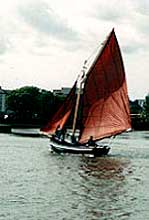 The Galway Hooker The Galway Hooker
This unique vessel, with its distinctive curved lines and bright red sails, originated in the village of Claddagh. During the 19th century, hookers supported a significant fishing industry and also carried goods, livestock and fuel. Seán Rainey is remembered for building the last of the original boats, the Truelight, for Martin Oliver who was to become the last king of the Claddagh; as king, he was entitled to white sails on his boat. Since the mid seventies, many of the old sailing craft which were on the verge of extinction have been lovingly restored and new ones have been built. During the summer months they can be seen at festivals such a Cruinniú na mBád - the Gathering of the Boats - in Kinvara. |
||||||
|
||||||||
| All contents copyright © 2001 through 2011 inclusive - all rights reserved. March 4, 2011 |
Rollover button Images: Wedding LaRose, Kids Reading & Kitchen Apples and Tea from All Posters prints. The information provided on this site is offered as-is, without warranty. This site's owners, operators, authors and partners disclaim any and all liability from the information provided herein. Any trademarks or registered trademarks on this site are the property of their respective owners. |
This Web Site Bashed, Kicked & Glued together by Russ Haggerty. |
||||||



 May - the month of mirth and merriment!