Custom Search
|
Custom Search
|
 |
|
"People will not look forward to posterity who never look backward to their ancestors."
Quotes
Shops Ireland Bunús na Gaeilge Did You Know? Himself/Herself Write to Us Readers Write.. Links/Link to Us Advertise with us Awards & Testimonials
|
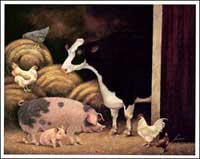
Irish Celebrations & Feast Days - Martinmas And then there were the pigs. They’d been feasting all summer and by St. Martin’s Eve, would be plump and full of flavor. In any event, the livestock that could not be wintered over would be sold, given away, or slaughtered to provide the family a supply of meat for winter. Whatever wasn’t used immediately was salted, cured and stored in oak barrels where it would last for many months. In pre-christian Ireland, it was the custom to sacrifice an animal on St. Martin’s Eve and then sprinkle drops of its blood on the threshold, as well as in the four corners of the house. This was done to drive off any evil spirits and also to ensure prosperity for the coming year. History tells us that the animal most often selected for this ritual was a pig. Most likely, this was because it was the commonest and smallest of the domestic animals. Whatever was sacrificed, the sacrificial animal was later cooked and provided a hearty meal for the family. If it was a large animal, portions were traditionally shared with those who were less fortunate. To this day, while the ritual of sprinkling blood may have long died out, it is still customary in Ireland to make a meal of fresh pork on St. Martin’s Eve. Read our article: The Feast of St. Martin |
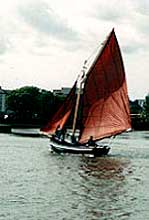 The Galway Hooker The Galway Hooker
This unique vessel, with its distinctive curved lines and bright red sails, originated in the village of Claddagh. During the 19th century, hookers supported a significant fishing industry and also carried goods, livestock and fuel. Seán Rainey is remembered for building the last of the original boats, the Truelight, for Martin Oliver who was to become the last king of the Claddagh; as king, he was entitled to white sails on his boat. Since the mid seventies, many of the old sailing craft which were on the verge of extinction have been lovingly restored and new ones have been built. During the summer months they can be seen at festivals such a Cruinniú na mBád - the Gathering of the Boats - in Kinvara. |
||||||
|
||||||||
| All contents copyright © 2001 through 2011 inclusive - all rights reserved. March 4, 2011 |
Rollover button Images: Wedding LaRose, Kids Reading & Kitchen Apples and Tea from All Posters prints. The information provided on this site is offered as-is, without warranty. This site's owners, operators, authors and partners disclaim any and all liability from the information provided herein. Any trademarks or registered trademarks on this site are the property of their respective owners. |
This Web Site Bashed, Kicked & Glued together by Russ Haggerty. |
||||||