

Custom Search
|
Custom Search
|
 |
|
"People will not look forward to posterity who never look backward to their ancestors."
Quotes
Shops Ireland Bunús na Gaeilge Did You Know? Himself/Herself Write to Us Readers Write.. Links/Link to Us Advertise with us Awards & Testimonials
|
Palm Sunday in old Ireland As for the womenfolk and children, they brought their fronds home. A palm would be hung up in the house; one would be put out in the barn so that the animals could share in the blessing. And another would be set aside to be used as a sprinkler for Holy Water. In many areas of Ireland, a palm stem was charred and a cross was marked on eggs set for hatching, while in parts of Galway and Mayo, a bit of palm was shredded and mixed through the seed grain. In any event, most families had extra eggs on hand because of the Lenten fast, so Palm Sunday was often the day that children called on neighbors and began collecting eggs for Easter. The date on which Palm Sunday fell was also closely observed. If it coincided with St. Patrick's Day, when "the Shamrock and Palm would be worn together", it was said that something unusual would occur. This could be interpreted as ominous. The optimistics predicted an exceptionally fine summer or an end to Ireland's troubles. They also made the same predictions when Palm Sunday fell on the feast of the Annunciation - March 25th. We did a bit of digging. In 1347, Palm Sunday coincided with the feast of the Annunciation. That year, the black death arrived in Messina. By New Year's Eve, it had spread to Genoa. Within three years it had wiped out one third of Europe. On a happier note, in 1945, the Annunciation and Palm Sunday coincided and the war in Europe came to an end. We found two other recent dates: St. Patrick's Day and Palm Sunday coincided in 1940: the Annunciation and Palm Sunday coincided in 1956. We'll be delving into the history books a bit further to see, in retrospect, if these old Irish predictions hold any water. For future reference: The next time the Annunciation and Palm Sunday coincide is 2018. As for St. Patrick's Day - it won't happen again until 2391. God willing, by then, the troubles will be as ancient history as the pyramids. |
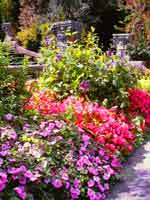 Ilnacullen, Co. Cork - an Island Garden Ilnacullen, Co. Cork - an Island GardenLocated in the sheltered harbour of Glengarriff in Bantry Bay. Ilnacullin, which means island of holly, is a small island known to horticulturists and lovers of trees and shrubs all around the world as an island garden of rare beauty. |
||||||
|
||||||||
| All contents copyright © 2001 through 2011 inclusive - all rights reserved. March 4, 2011 |
Rollover button Images: Wedding LaRose, Kids Reading & Kitchen Apples and Tea from All Posters prints. The information provided on this site is offered as-is, without warranty. This site's owners, operators, authors and partners disclaim any and all liability from the information provided herein. Any trademarks or registered trademarks on this site are the property of their respective owners. |
This Web Site Bashed, Kicked & Glued together by Russ Haggerty. |
||||||



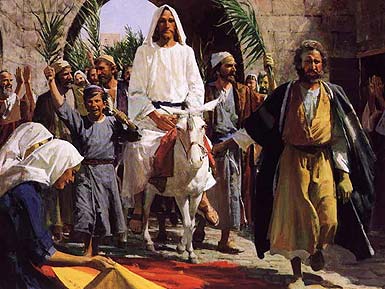 Irish speakers once referred to Palm Sunday as Domhnach an Iúir - Yew Sunday. That's because the "palm" was most often a sprig from the yew tree or some other conifer such as a silver fir, spruce or cypress. In County Fermanagh, early on every Palm Sunday morning, a Protestant cut down sprigs of yew and placed them on his garden wall.